Showing posts with label Cannabis Industry News. Show all posts
Showing posts with label Cannabis Industry News. Show all posts
Wednesday, July 15, 2020
New Mexico’s largest medical marijuana company is suing the state over new MMJ regulations it calls “arbitrary and capricious.”
According to the Santa Fe New Mexican, Ultra Health, based in Bernalillo, is challenging the state health department over several new rules, including:
Strict testing requirements for pesticides, heavy metals and microbials.
Regulations concerning hemp cultivation and extracts.
Labeling requirements.
Criteria about license suspensions or revocations.
Ultra Health CEO and President Duke Rodriguez has been successful in several other lawsuits against the health department over other medical cannabis rules.
Pure CBD Hemp Oil
Pure CBD Tincture, derived from organic, US-harvested hemp, lab-tested for quality.
Farm cash receipts in British Columbia hit a record high in 2019, boosted by an increase of nearly 300 million Canadian dollars ($221 million) in cannabis sales.
The annual growth in cannabis cash receipts in British Columbia far outpaced growth in other agricultural sectors such as dairy (CA$47 million), beef (CA$25 million) and field vegetables (CA$17.5 million), the provincial government reported Tuesday.
Total farm cash receipts for the province in 2019 reached CA$3.9 billion, an increase of CA$462 million over 2018.
The West Coast province is home to 99 of Canada’s 423 cannabis licenses for growing, processing or selling marijuana, according to Canada’s cannabis license registry.
On a national level, Canada’s total cash farm receipts grew by nearly 6% in 2019, rising to CA$66.1 billion. Crop receipts increased by 3.9% on an annual basis to reach CA$36.6 billion.
National cannabis crop receipts were CA$2.3 billion in 2019, an annual increase of more than 300% during the country’s first full year of recreational marijuana legalization.
Pure CBD Hemp Oil
Pure CBD Tincture, derived from organic, US-harvested hemp, lab-tested for quality.
A court case that could open up stand-alone licensing opportunities in Florida’s vertically integrated medical marijuana market isn’t going to be decided anytime soon.
In a rare move, the Florida Supreme Court – which held oral arguments on the issue in early May – scheduled a second set of oral arguments for Oct. 7.
Industry officials had expected a ruling this summer.
The case, filed by Tampa-based Florigrown, has been dragging on since the summer of 2018, when Leon County Circuit Judge Charles Dodson declared that licensing limits imposed by a 2017 law violated the MMJ constitutional amendment approved by Florida voters in 2016.
At one point, Dodson told Florida regulators to quit stalling and issue additional licenses, but the state instead decided to fight his ruling.
Under the current vertically integrated structure and licensing caps, a handful of operators control a Florida medical cannabis market that Marijuana Business Factbook projects will reach $775 million to $950 million in sales this year.
Florida-based Trulieve by itself has a market share exceeding 50% and operates 51 of Florida’s 258 dispensaries, according to the state’s latest weekly update.
Pure Cannabis Hemp Oil
Pure CBD Tincture, derived from organic, US-harvested hemp, lab-tested for quality.
To get around the enormous barriers to entry for California’s legal marijuana industry, a growing number of small farmers are increasingly turning to a practice mainstream agriculture has used for generations: so-called “contract farming.”
It’s a different business model from regular employment by a cultivation company, and the types of contracts can vary widely.
In short, landowners obtain local and state cultivation permits and then bring on experienced marijuana growers to do the actual farming, with the promise of splitting profits from the crop.
“It is common. We’ve done a ton of agreements of this type in the last two years,” said Heather Burke, an attorney in Nevada City who works mainly with legacy growers, many of whom were unable to get state cultivation permits on their own after 2018 because of various barriers to entry.
“It’s actually a wonderful way for a legacy farmer who didn’t get access to the market to get their foot in,” she added.
Though Burke said her clients have not had any issues with such arrangements, at least two lawsuits have been filed over such deals that have fallen through, with allegations that include fraud, breach of contract and labor law violations.
In one battle, the landowner-farmer deal was even referred to as “sharecropping,” which for some – like Burke – is objectionable because the term is connected to racial oppression of Blacks through agriculture.
Legal fights
San Francisco attorney Katy Young filed two lawsuits in December, both related to eerily similar situations.
Her clients claimed they were abused by landowners who held cultivation licenses and lured them into growing marijuana for them, only to leave the plaintiffs high and dry when it came time to collect on the crops.
That was the first Young had heard of contract farming as a business model for marijuana growers, since most California cannabis farms are traditionally run by a single company that keeps all the profits.
But since then, she’s realized how widespread the practice has become since 2018, when the state’s adult-use market kicked off.
“It’s all over,” Young said, noting that one of her clients is based in Northern California and the other in Southern California, hundreds of miles apart.
The first suit, filed in Sacramento County Superior Court by a company called Spooky Action and its officers, alleges that the defendants – a family that runs several cannabis companies – defrauded them out of $1.3 million through a “sharecropping agreement” that lasted from 2017 to 2019.
Then, the suit contends, the family cheated the plaintiffs out of their share of profits from a crop worth $700,000.
The second suit, filed in Los Angeles County Superior Court by a company called Right Brothers Management, alleges that a company in Lompoc run by a “wolf dressed in sheep’s clothing” cheated the plaintiffs out of $750,000 worth of cannabis grown and sold in 2018, along with nearly $500,000 that the Right Brothers paid to get the farm operational.
The common thread between the two situations, Young said, was the landowners had most of the capital they needed, along with the requisite permits, but lacked the know-how to grow marijuana profitably.
“The thread that pulls them together is the huge potential for abuse,” Young said. “This speaks to the regulatory setup.
“It’s so expensive to become a cannabis cultivator that this type of arrangement is the cheapest and easiest way for legacy growers to get into the market. It happens everywhere.”
Both lawsuits are ongoing.
‘Sharecropping’ in California cannabis
The practice itself – of landowners entering into contracts with farmers to grow marijuana – is nothing new, said Hezekiah Allen, board chair of California cannabis farmer cooperative Emerald Grown.
Allen, who grew up in Humboldt County, the heart of California’s Emerald Triangle, said he took part in such a deal himself from 2006 to 2008.
“I was a sharecropper for a few years. It was kind of how you got established in the business,” Allen said.
In that sense, he said, it was akin to “an apprenticeship, where you manage someone else’s farm for less than you were worth before you got your own farm.”
These days, Allen said, it’s more a question of precisely how such agreements and contracts are structured, which he noted can often get “messy.”
He recalled some friends from the Triangle even getting into fistfights over who owed whom and how much.
“These things are rife with miscommunication,” Allen said, adding that an obvious problem could be if a farm runs at a loss instead of a profit. If there aren’t any profits to split, that’s a situation ripe for a dispute between the partners.
Burke agreed, saying the specifics in written contracts with such deals are crucial.
In short, everyone involved should know exactly where they stand, particularly because the legal market is still evolving from the old-school way of doing business with a handshake.
“In the new world,” Burke said, “you have to parse out, ‘What is this? Is this an equity type of analysis that’s going to vest in ownership? Is this a joint venture between the two of you? Or is this a straight-up management agreement? Are you paying someone to come in and manage the grow?’
“It could be any number of relationships,” she added. “And because of the volatility of the market, it could be any number of contractual relationships that could be characterized as contract farming.”
The bottom line for Burke and others is that contract farming will probably become more common as time goes on.
“It’s pretty beneficial. It allows a lot of flexibility in a very rigid marketplace,” Burke said.
John Schroyer can be reached at [email protected]
Pure CBD Hemp Oil
Pure CBD Tincture, derived from organic, US-harvested hemp, lab-tested for quality.
Law 360 are saying that GM Tax Partner, James B Mann, has left the firm and taken the Harborside case with him.. we can’t tell you anymore than that as it’s all behind a paywall .
So have a look at https://www.law360.com/articles/1292048/tax-partner-exits-greenspoon-marder-with-landmark-pot-suit
Or you can have a word with the man himself at his Linked In – where you can see he’s already dumped GM
About
My current areas of focus are the taxation of cannabis enterprises and general tax accounting issues. I have over 25 years of experience serving as a trusted advisor to a broad range of stakeholders in the energy, financial services, and now cannabis industries.
I have advised financial institutions regarding international tax, structuring renewable energy asset-based bank loans and securitizations, cross-border tax-advantaged partnerships and securitizations, project finance, and renewable energy deals.
Pure CBD Hemp Oil
Pure CBD Tincture, derived from organic, US-harvested hemp, lab-tested for quality.
A high-profile medical cannabis producer filed a petition in a state district court last week, asking a judge to invalidate rules recently put in place by the New Mexico Department of Health.
In the petition, lawyers for cannabis producer Ultra Health argued that many of the recently adopted rules regarding plant and product testing, product labels and facility safety standards are “arbitrary and capricious.”
Last year, the state’s Medical Cannabis Program, which is part of the DOH, started the rule change process with a series of public meetings, which carried over to early this year. The rules, which range from pesticide and chemical testing to reciprocity for already approved cannabis patients from other states, went into effect earlier this month. But Ultra Health’s petition focuses on the new standards for producers, some of which the petition says would increase the financial burdens for patients.
“Producers, who already pay well over $100,000 per year for their license and are precluded by federal law from taking any income tax deductions, will have to pay for the increased testing burden and will pass along the costs to patients,” the petition reads.
A DOH spokesman wouldn’t say if or when the department would respond to the request to annul the new rules.
“The Department of Health does not comment on pending litigation,” DOH spokesman David Morgan said.
Arguably a perennial thorn in the side of the department, Ultra Health and its CEO Duke Rodriguez have filed numerous legal actions against the state over issues like the legality of displaying a cannabis plant at the state fair and increasing the number of plants producers can grow. Brian Egolf, who also serves as the state’s speaker of the House, is one of two lawyers who filed the petition.
Testing and labels
The new rules from the DOH spell out specific standards for testing plants for fungus, pesticides and heavy metals. But in the petition, Ultra Health’s lawyers argued that the department failed to show evidence that the safe level of contaminants is based on studies or science.
“While Petitioner Ultra Health agrees that some testing is necessary to protect the safety of cannabis patients, DOH’s rules do not draw the necessary connection between the arbitrarily chosen testing parameters and specific measurements of patient safety,” the petition states.
The petition also asserts that the DOH simply copied regulations from other states like Colorado and Oregon, where both medical and recreational-use cannabis are legal. Therefore, the petition reasons, standards for places with different climates should not be applied to New Mexico.
“All of the biological and environmental differences between New Mexico and other regions guarantee that cannabis grown in New Mexico will have a very different potential for various kinds of contaminants than cannabis grown in Colorado or Oregon, but DOH never considered these basic environmental factors that make New Mexico unique,” the lawyers wrote.
The petition also takes issue with a rule that allows the DOH to randomly test products that are already packaged and ready to sell. That could, the petition argues, put a financial strain on producers if they are not compensated for the finished products pulled from shelves for testing.
The rule changes also included one that requires producers to both label products with product information and provide a “drug information sheet” with details about each product.
The petition called the rule requiring both labels and fact sheets that include overlapping information a “belt-and-suspenders rule” with “unnecessary redundancies.”
The petition also calls for the removal of a rule that specifies requirements for state approved testing laboratories. The state does not have its own testing laboratories. The two laboratories approved for testing will physically and financially be overburdened by the updated rule, the petition argues.
“Indeed, New Mexico has only two cannabis testing laboratories, and if one of them cannot meet DOH’s requirements, testing would slow to a crawl and a program that serves 92,000 medically fragile New Mexicans would be severely disabled,” the petition reads. “If both laboratories cannot meet DOH’s requirements, the Medical Cannabis Program would cease to function.”
No mixing of plants
One of the rules recently promulgated by the Medical Cannabis Program and the DOH states that hemp plants cannot be grown on the same property as medical cannabis.
In New Mexico, hemp growing operations are regulated by the state’s Department of Agriculture, which Ultra Health’s petition argues puts the issue out of the purview of the DOH.
“The Department of Health, on the other hand, has never been given any kind of regulatory authority over hemp,” the petition reads.
Hemp and cannabis are in the same plant family but hemp is defined as having less than 0.3 percent of THC, the substance that is responsible for the psychoactive properties of cannabis.
The petition argues that medical cannabis and hemp are already segregated in practice in order to avoid cross contamination and avoid lower THC levels in medical cannabis plants or increased levels in hemp plants.
The petition also takes aim at a rule requiring hemp extracts, such as CBD, and hemp products not be combined with medical cannabis products.
“Again, this rule is outside the scope of DOH’s authority, since the responsibility to regulate how hemp is used resides with the Department of Agriculture,” Ultra Health’s lawyer wrote. “There is no indication from the rulemaking record that DOH cooperated with, consulted with, or engaged in any dialogue with the Department of Agriculture on development of this rule.”
Zoning, hygiene and repairs
The new rules state that medical cannabis production sites comply with local zoning laws, which Ultra Health argued in the petition puts an unnecessary burden on producers who rent space and have no control over the physical space. Further, Ultra Health’s lawyers wrote, any repairs or updates to production facilities face an unnecessary level of bureaucracy. Under the new rules, “any” physical modification to production facilities would require an approved amendment to the respective producer’s license. According to the petition, Ultra Health and its lawyers interpret that to include “changing a lightbulb, installing an air conditioner, or adding an additional greenhouse.”
“It is arbitrary and capricious to require licensees to constantly submit applications for amended licenses whenever they change a lightbulb,” the petition reads.
The petition argues that a rule requiring floors in production facilities be washable, wipeable, and non-absorbent is too broad and should not apply to grow facilities.
“Washable floors may make sense for an area where edibles are assembled or where cannabis is dried and cured,” the petition reads. “However, as the public comments from licensees indicated, washable floors do not make sense for cultivation and harvesting areas.”
Marijuana track-and-trace company Metrc continues its legal tangle with Missouri state officials over the right to charge “tag fees” to medical cannabis dispensaries.
In the latest development, Metrc wants a Missouri appellate court to overturn a lower court’s decision that would prevent the Florida-based company from charging fees for radio-frequency identification (RFID) tags, Law360 reported.
The dispute dates to 2019, shortly after Metrc was awarded a $5 million contract by the state after a competitive bidding process.
Almost immediately, a rival protested to the state that Missouri’s deal with Metrc could contain hidden costs.
State regulators rejected the notion, saying Metrc’s contract did not allow the company to charge tag fees to MMJ licensees.
Metrc later sued in court, claiming that Missouri’s medical marijuana program rules do allow such fees.
The track-and-trace dispute is one of several controversies dogging a Missouri medical marijuana program that has been delayed by the coronavirus pandemic.
In addition, Missouri faces hundreds of licensing appeals and investigations into possible misconduct by state regulators.
Pure CBD Hemp Oil
Pure CBD Tincture, derived from organic, US-harvested hemp, lab-tested for quality.
4Front Announces First Quarter 2020 Results and Business Update
Q1 2020 Systemwide Pro Forma Sales of $23.7m, an increase of 36% over Q4 2019.
Robust consumer demand continues across all operating markets despite COVID-19.
Company reaches final resolution with the Massachusetts Cannabis Control Commission with respect to legacy regulatory issues. The Company expects the agreement will clear the path for recreational licensing of its Massachusetts locations.
Funded expansion plans underway in both Massachusetts and Illinois production facilities expected to be completed by Q4 2020.
Company remains on pace to be cash flow positive in 2H 2020 and poised to show significant operating leverage in 2021.
Company is in progressive discussions to strengthen its balance sheet through a financing/sale leaseback of its affiliated facilities in Washington state.
PHOENIX, AZ, July 14, 2020 /PRNewswire/ – 4Front Ventures Corp. (CSE: FFNT) (OTCQX: FFNTF) (“4Front” or the “Company”) today announced its financial results for the First Quarter of 2020.
First Quarter 2020 Financial Results Highlights
Total Systemwide Pro Forma Sales for the first quarter 2020 increased 36% quarter-over- quarter to $23.7m.
IFRS Sales for the first quarter of 2020 increased 37% quarter-over-quarter to $17.7m.
Gross profit for the first quarter was $9.7m.
Adjusted EBITDA for the first quarter was a loss of $2.8m.
Business Update
Robust consumer demand continues across all operating markets despite COVID-19. All states where the Company operates have deemed cannabis operations as “essential businesses” during the pandemic.
Company reaches a resolution with the Massachusetts Cannabis Control Commission with respect to legacy regulatory issues. The Company expects the agreement will clear the path for recreational licensing of its Massachusetts locations.
Funded expansion plans underway in both Massachusetts and Illinois production facilities expected to be completed by Q4 2020. These upgrades represent Phase 1 of the Company’s expansion plans in two of its core markets which are expected to double the output of its Georgetown, Massachusetts facility and more than triple current output in Illinois.
Company remains on pace to be cash flow positive in 2H 2020 and is poised to show significant operating leverage in 2021. Having reduced corporate overhead expense by over 40%, the Company anticipates generating positive cash flow commensurate with final recreational licensing in Massachusetts and producing positive adjusted EBITDA in 2020.
Washington Financing/Sale Leaseback Update. As of May 31, 2020, 4Front’s balance sheet had cash and equivalents of $11.5m with total debt of $80.1m (excluding in-the-money convertible debt of $5.8m). The Company owns and controls highly attractive real estate in Washington state consisting of 176,000 square feet of state-of-the-art industrial space built for cultivation, production and distribution. The assets are encumbered by senior secured debt associated with Gotham Green Partners. A financing/sale and leaseback of these assets is expected to remove senior secured debt from its capitalization table, giving the Company flexibility to more freely pursue non or minimally dilutive project financing options. The Company is in progressive discussions with multiple partners on this transaction.
Management Commentary
Entering 2020, we have been laser-focused on leaning out and replicating our low-cost cultivation and production model in targeted states.
Leo Gontmakher, CEO of 4Front
We left the first quarter with a focused business model, streamlined cost structure and fortified balance sheet that has set the stage for us to accelerate growth across our core markets of Washington, Illinois, Massachusetts, Michigan and California.
Mr. Gontmakher added: “We are ecstatic to have reached resolution with the Massachusetts Cannabis Control Commission as it clears the way for our long-awaited approvals for adult-use licensing in the state. We continue to execute on our plans to not only flip to cash flow positive this year, but to set the stage to exit this year in a position to drive meaningful operating leverage in our business. With funded expansion already underway in Massachusetts and Illinois, we look forward to commencing construction of our Commerce, California facility before the end of the year. We are proving that our success in Washington can be replicated in every state in which we operate and are extremely confident in how the company is positioned as we enter this new season.”
(Please see Note Regarding Non-IFRS Measures, Reconciliation, and Discussion below.) (*Please see the Financial Statement section below, and the Company’s First Quarter 2020 Unaudited Condensed Consolidated Financial Statements and Management Discussion and Analysis (“MD&A”), available under the Company’s SEDAR profile, for more information.)
Additional Details
As of the date of the MD&A, there were the equivalent of 506,379,437 Class A Subordinate Voting Shares outstanding when calculated as if all share classes were converted to Subordinate Voting Shares. For further details regarding 4Front’s share structure, please see its profile at www.thecse.com.
Conference Call
The Company will also host a conference call and webcast on Tuesday, July 14, 2020 at 5:00 p.m. EDT to review its operational and financial results and provide an update on current business trends.
To join the call, dial 1-877-407-0792 toll free from the United States or Canada or 1-201-689-8263 if dialing from outside those countries. The webcast, which will include a slide deck, can be accessed at this link.
The call will be available for replay until Tuesday, July 21, 2020. To access the telephone replay, dial 844-512-2921 toll free from the United States and Canada, or 1-412-317-6671 if dialing from outside those countries, and use this replay pin number: 13706966.
Financial Statements
The condensed consolidated interim financial statements for the three months ended March 31, 2020 and 2019, have been prepared in accordance with IAS 34 – Interim Financial Reporting. These statements have not been reviewed by an auditor.
Note Regarding Non-IFRS Measures, Reconciliation, and Discussion
In this press release, 4Front refers to certain non-IFRS financial measures such as Systemwide Pro Forma Revenue and Adjusted EBITDA. These measures do not have any standardized meaning prescribed by IFRS and may not be comparable to similar measures presented by other issuers. 4Front defines Systemwide Pro Forma Revenue as total revenue plus revenue from entities with which the Company has a management contract, or effectively similar relationship (net of any management fee or effectively similar revenue) but does not consolidate the financial results of per IFRS 10 – Consolidated Financial Statements. 4Front considers this measure to be an appropriate indicator of the growth and scope of the business.
Adjusted EBITDA is defined by the Company as earnings before interest, taxes, depreciation and amortization less share-based compensation expense and one-time charges related to acquisition and financing related costs, excluding fair value adjustments for biological assets. 4Front considers these measures to be an important indicator of the financial strength and performance of our business. The following tables provide a reconciliation of each of the non-IFRS measures to its closest IFRS measure.
About 4Front Ventures Corp.
4Front (CSE: FFNT) (OTCQX: FFNTF) is a national multi-state cannabis operator and retailer, with a market advantage in mass-produced, low-cost quality branded cannabis products. 4Front manufactures and distributes a portfolio of over 25 cannabis brands including Marmas, Crystal Clear, Funky Monkey, Pebbles, and the Pure Ratios wellness collection, distributed through retail outlets and their chain of strategically positioned Mission branded dispensaries.
Headquartered in Phoenix, Arizona, 4Front has operations in Illinois, Massachusetts, California, Michigan and Washington state. From plant genetics to the cannabis retail experience, 4Front’s team applies expertise across the entire cannabis value chain. For more information, visit 4Front’s website.
This news release was prepared by management of 4Front Ventures, which takes full responsibility for its contents. The Canadian Securities Exchange (“CSE”) has not reviewed and does not accept responsibility for the adequacy of this news release. Neither the CSE nor its Regulation Services Provider (as that term is defined in the policies of the CSE) accepts responsibility for the adequacy or accuracy of this release.
This news release does not constitute an offer to sell or a solicitation of an offer to sell any of the securities in the United States. The securities have not been and will not be registered under the United States Securities Act of 1933, as amended (the “U.S. Securities Act”) or any state securities laws and may not be offered or sold within the United States or to U.S. Persons unless registered under the U.S. Securities Act and applicable state securities laws or an exemption from such registration is available.
Multistate cannabis grower and retailer iAnthus Capital Holdings announced a restructuring support deal with a recapitalization component, giving the company an opportunity to reduce its outstanding debt.
The New York-based company with offices in Toronto received a demand for repayment on its secured debentures in June after defaulting on interest payments.
After a strategic review, iAnthus’ board “concluded that the recapitalization transaction represents the best available alternative to improve the company’s capital structure and to maximize and preserve value for the company and its stakeholders,” iAnthus said in a news release.
The restructuring support agreement announced Monday is supported by all of iAnthus’ secured lenders and more than 91% of unsecured debenture holders, the company said.
The deal would reduce iAnthus’ outstanding debt from nearly $169 million to about $101 million and provide $14 million in interim financing.
The company would also issue $20 million in new equity to its secured lenders and unsecured bondholders.
The deal is subject to court approval in Canada.
Interim CEO Randy Maslow said iAnthus has faced liquidity challenges stemming from a “decline in the overall public equity cannabis markets” combined with the impact of the COVID-19 pandemic.
The company trades on the Canadian Securities Exchange as IAN, but trading is currently suspended.
Pure Cannabis Hemp Oil
Pure CBD Tincture, derived from organic, US-harvested hemp, lab-tested for quality.
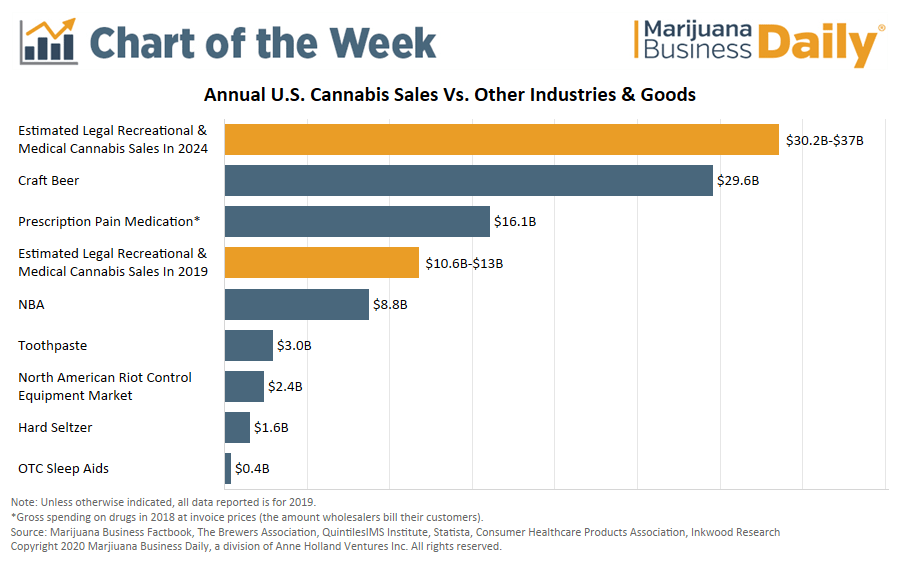
With revenue of $10.6 billion-$13 billion in 2019, sales of legal adult-use and medical marijuana in the United States topped spending on sleep aids, hard seltzer and toothpaste combined.
Total marijuana sales now exceed the National Basketball Association’s annual U.S. revenue and, by 2024, could surpass Americans’ annual spending on craft beer.
The data – published in the 2020 edition of the Marijuana Business Factbook – underscores the fact that the U.S. cannabis industry is already a major economic force, even though it has yet to reach its full potential.
Sharp sales increases in new medical marijuana programs as well as continued gains in recreational markets are expected to fuel much of the industry’s growth over the coming years.
Recently launched MMJ markets – including Florida, Maryland, Oklahoma and Pennsylvania – are booming and, thus, more than offsetting lost medical sales in markets that have legalized adult-use sales, such as Illinois, Massachusetts and Michigan.
MMJ sales in Florida and Oklahoma are expected to surpass $1 billion each by 2021, placing them among the most valuable and rapidly growing cannabis markets in the United States – medical or recreational.
On the adult-use side, sales in mature markets remain robust, while revenue in newly legalized states such as Illinois and Michigan is expected to grow quickly.
California’s massive market continues to struggle with high taxes, local licensing restrictions and an entrenched illicit market.
But conditions are expected to improve in the coming years as businesses adapt to the state’s unique regulatory environment and more municipalities allow recreational businesses to operate in their jurisdictions.
Further growth will come as more states legalize adult-use cannabis. Arizona and New Jersey could be the next to do so, with residents in both states set to vote on recreational ballot initiatives in November.
The coronavirus pandemic, however, has added a significant amount of uncertainty to the equation.
Though cannabis sales have proved remarkably resilient throughout the coronavirus pandemic, it remains to be seen how they’ll fare amid a prolonged economic downturn.
Eli McVey can be reached at [email protected]
Pure CBD Hemp Oil
Pure CBD Tincture, derived from organic, US-harvested hemp, lab-tested for quality.
Hawaii lawmakers passed a bill allowing medical marijuana edibles, a move that could significantly boost the roughly $16 million-$20 million-a-year market.
The legislation has been sent to the desk of Gov. David Ige, a Democrat, who has been resistant to some cannabis policy reforms. The bill enjoyed strong support in the Legislature.
The Hawaii Cannabis Industry Association (HCIA) praised the Legislature’s action, which came in a session shortened by the coronavirus pandemic.
“Medical cannabis patients have been asking for alternative ways to take their medication other than inhalation since the first dispensary opened their doors,” according to a Facebook post by the HCIA.
“This is especially important in a COVID-19 world where lung and overall health are on the forefront of our minds.”
Edibles sales have been strong in many U.S. markets during the coronavirus crisis. And the cannabis industry has been bolstered by the fact that many states have categorized medical marijuana dispensaries as essential businesses.
The Hawaii legislation would take effect on Jan. 1, 2021, but the state health department would need to develop rules before edibles sales could begin, a dispensary owner told Big Island Now.
Hawaii currently has about 30,000 registered medical cannabis patients. The program is heavily regulated, with only eight vertically integrated licensees.
Marijuana Business Factbook projects that 2020 sales will reach $16 million-$20 million, up from $14 million-$17 million in 2019.
Pure Cannabis Hemp Oil
Pure CBD Tincture, derived from organic, US-harvested hemp, lab-tested for quality.
A new monograph from German health regulators that defines cannabis extracts (Cannabis extractum normatum) might require companies currently selling or planning to peddle these products in Germany to adapt their formulations.
The new entry in the latest version of the German pharmacopoeia (Deutsches Arzneibuch, DAB) went into effect June 1.
Before this document, full-spectrum cannabis extracts were considered legal in Germany, but neither the national nor the European pharmacopoeia defined them.
The German pharmacopoeia – binding only on a national level – has included a cannabis monograph since 2017 – but only for flower.
No European cannabis monograph exists, but a draft is in the works. If ever published, a European cannabis monograph would facilitate standardization across the continent.
To comply with the cannabis extracts rules, Canadian-based Tilray changed the carrier oil of the full-spectrum extract THC25, which it sells in Germany, Apotheke Ad-Hoc reported.
According to the report, Tilray THC25 oil started using medium-chain triglycerides (MCT) as carrier oil instead of grape seed oil, which the company had been using.
THC25 is a full-spectrum oil that has 25 milligrams/milliliters of THC and less than 0.5 milligrams/milliliters of CBD, sold in 25-milliliter bottles.
Pharmacists dispensing magistral preparations in Germany – the category under which Tilray oils are currently sold – must, among other things, test the products before handing them over to patients.
According to Apotheke Ad-Hoc, Tilray will continue providing the same THC “rapid test” as before because it also works with the new formulation, delivering the result in only a few minutes. This is much faster than a thin-layer chromatography (TLC).
In theory, pharmacists should conduct a TLC to test cannabis extracts, but several regional German health authorities tolerate simpler alternatives.
Sita Schubert, secretary general of the European Medicinal Cannabis Association, recently recommended lowering the minimum THC called for in the new German monograph for cannabis extracts from 1% to 0.2%.
The 1% THC lower limit in the monograph means that only products with at least that percentage of THC qualify as medicinal cannabis extracts.
According to the EUMCA, this could deny younger patients “access to their existing treatments,” and “the physician, not the policymaker … should be making the decision on the appropriate course of treatment and formulation for their patient.”
Alfredo Pascual can be reached at [email protected]
Pure CBD Hemp Oil
Pure CBD Tincture, derived from organic, US-harvested hemp, lab-tested for quality.
iLAVA of Arizona owns 100% of a cultivation and processing license and is now requesting proposals for a financed operator with cultivation experience to enter one of America’s top cannabis markets. Our ideal partner must be focused on quality control, compliance, and has experience designing and building out cannabis cultivation operations. The Arizona medical marijuana program and upcoming adult use initiative do not limit cultivation canopy size or limit plant count. Arizona’s population is over 7.2 million as of 2019.
Over 190,000 lbs. of medical marijuana is sold per year in the Arizona cannabis market. In May 2020, cannabis sales in Arizona’s medical dispensaries reached $93 million, growing seven percent from April. There are currently over 245,000 registered medical marijuana patients in Arizona and patient cards are valid for 2 years.
The iLAVA management team opened The Downtown Dispensary in 2013 which has won Best of Tucson® in 2015, 2016, 2017, and 2019. The iLAVA team currently operates 2 dispensaries and an industrial medical marijuana cultivation/production facility with 120+ employees in Tucson. iLAVA products are also distributed in 80+ dispensaries statewide including the bestselling topical in Arizona, iLAVA Touch, in addition to our vape cartridges & extracts. Arizona currently has 126 operating dispensaries statewide.
The iLAVA distribution network and the product expertise of our retail staff will be available to our potential partners. This opportunity includes cultivation and can include marijuana product manufacturing & distribution depending on negotiated deal terms.
Due to Arizona’s medical marijuana laws and our internal practices, any qualified individuals must be able to pass a criminal background check and provide proof of funding upon request.
This opportunity is being listed by the iLAVA management team (Moe Asnani & Chip Boyden) and not by a broker or third party.
Interested parties can email their proposals to enter the Arizona market at [email protected].
This is a paid post. Contact [email protected] for more information.
Pure CBD Hemp Oil
Pure CBD Tincture, derived from organic, US-harvested hemp, lab-tested for quality.
SAN MATEO, Calif., July 14, 2020 (GLOBE NEWSWIRE) — Plus Products Inc. (CSE: PLUS) (OTCQX: PLPRF) (the “Company” or “PLUS”), a cannabis and hemp branded products company in the U.S., today announced the launch of its new HI-CUBES brand into the California adult-use market.
Highlights
Most concentrated gummy product (THC by volume) available in the California market.1
100% whole plant, full-spectrum oil delivers cannabinoids, flavonoids and aromatic terpenes for a more dynamic high.
Great tasting and guilt-free: only 5 calories and less than 1g of sugar per cube.
New line-up will initially include two high THC gummy products specifically formulated for cannabis users looking for a stronger psychoactive effect.
HI-CUBES is the third edibles brand launched by PLUS, well known for its core brand of high-quality and precisely dosed gummies and mints.
With 10mg of THC packed into each 5 calorie serving, HI-CUBES are the most concentrated gummy products available within the California market.1 Manufactured with 100% whole-plant, full-spectrum oil, the product delivers an array of cannabinoids, flavonoids and aromatic terpenes to create a powerful effect for consumers looking for an intense cannabis experience. This new line offers consumers the same great-tasting and guilt-free product experience as PLUS gummies, with less than 1g of sugar per cube.
Following the launch of our PLUS CBDRelief brand this past February, we are excited to further expand our portfolio to ensure that consumers looking for all different types of experiences can turn to our brands for their cannabis needs.
Jake Heimark, Co-founder and CEO.
The new brand, HI-CUBES, initially includes two flavors – Indica Plum and Sativa Strawberry – each with 10mg of THC per gummy, and 100mg of THC per package. These products are currently available in over 40 licensed retailers across the state of California.
(1) According to internal market research.
Availability
California THC: PLUS cannabis-infused edibles are currently available in over 360 licensed retailers across the state of California. PLUS CBDRelief cannabis-infused gummies are currently available in over 240 licensed retailers across the state of California. HI-CUBES cannabis-infused gummies are expected to continue rolling out to licensed retailers across the state in the coming weeks.
Nevada THC: PLUS cannabis-infused gummies are currently available in licensed retailers throughout Las Vegas.
National Hemp CBD: PLUS 100% hemp CBD-infused gummies are available for purchase in 43 states across the country at plusproducts.com.
About PLUS
PLUS is a hemp and cannabis food company focused on using nature to bring balance to consumers’ lives. PLUS’s mission is to make cannabis safe and approachable – that begins with high-quality products that deliver consistent consumer experiences. PLUS is headquartered in San Mateo, CA.
(Editor’s note: This story is part of a recurring series of commentaries from professionals connected to the cannabis industry. Naomi Granger, CPA, MBA, is the co-founder of Dope CFO.)
Cannabis companies should expect an uptick in IRS audits.
A recent report by the Treasury Inspector General for Tax Administration puts a target on marijuana.
Companies that have failed to pay their full federal tax obligations or neglect to maintain clean, well-organized books will be in for a rude awakening if the taxman comes visiting.
If the IRS knocks on your door, preparation is key.
Start getting your house in order with these seven tactics:
1. Don’t bury your head in the sand.
The books and records are always the responsibility of the business owner. CEOs cannot bury their heads in the sand.
It’s the owner who will be faced with litigation and held responsible for any back taxes or penalties and possibly even jail time if statements are considered criminal.
Have a high-level understanding of what’s required of you from an accounting and tax standpoint and have checks and balances in place to ensure whomever you are hiring is performing adequately.
2. Are these expenses ordinary and necessary?
It’s tempting to claim deductions on your business expenses, but make sure those purchases truly meet the standard of being ordinary and necessary.
For example, when making large purchases, such as a company car, a new piece of equipment or even a new piece of software, you must be able to make a business case for such expenses.
A company car intended to improve the image of a dispensary is not “necessary” and likely wouldn’t pass as a marketing expense.
However, if your business provides transportation and delivery services and a company car is needed, then you’ve passed the “necessary” test.
Then there’s the “ordinary” test. A delivery business wouldn’t need to purchase a Bugatti to perform those services. A more reasonable, reliable and fuel-efficient vehicle would pass the test over a high-end luxury brand.
3. Substance over form.
The IRS looks at the economic substance of a transaction over the legal form.
For instance, if you were advised to set up multiple legal entities to get around Section 280E (including federally legal businesses such as a management company, a payroll firm or a leasing company) and these entities exist solely to support your cannabis business, the IRS will consider this as one cannabis enterprise and the entire structure will be subject to 280E, regardless of the legal form.
4. Receipts – or it didn’t happen.
Work with your accountant to set up an easy receipt- and expense-management system.
Use systems such as Expensify, Hubdoc, and Concur with mobile apps so that you can take pictures of your receipts immediately as you collect them.
In the event of an audit, you’re going to want to be able to substantiate at a minimum 80% of each profit-and-loss (P&L) line item.
Not having proper support could open up your business to the risk of the IRS pulling an additional year to audit due to your books being incorrect during the year under audit.
Bank statements and credit card statements alone are not enough.
You will need invoices and receipts for purchases.
Invoices help the auditors understand what was purchased and when the purchase was made, and receipts help auditors confirm that the invoice was actually paid and there are no further liabilities associated with that purchase.
With only a bank statement, we’re unable to determine if the expense is properly categorized on the P&L.
Additionally, accrual accounting requires expenses to be booked as incurred, and since payment terms vary from vendor to vendor, a bank statement does not give enough information about when an expense was incurred.
Another thing to look out for when using bank statements: Be careful with deposits and transfers. All items that hit the account are considered income. Proper documentation and the ability to substantiate business income is a must.
5. Document to remember.
Not only do you need support, but you must also document the accounting treatment. The cannabis industry is highly regulated, and the regulations are constantly changing.
A properly trained accountant understands how to document the accounting treatment for these purchases based on the facts and circumstances at the time.
The Californians Helping to Alleviate Medical Problems (CHAMP) tax court case in 2007 is an example of great accounting, while the Alterman case, which was decided in 2018, is an example of both poor accounting and poor recordkeeping.
IRS audits typically come three to four years after the fact.
It’s very difficult to go back four years and remember why a particular expense was capitalized to inventory, when current facts and circumstances would not allow the capitalization of this expense.
6. Time is of the essence.
When working with the IRS, you will need to be cognizant of, and adhere to, the deadlines set during the audit.
You will need to respond, submit documentation, argue, reply or contest within these deadlines, as missing these deadlines might result in you waiving your rights to appeal.
7. Don’t go it alone.
Ensure you have a good attorney and a tax CPA in place to help you through the process. Do not try to work through the audit with just yourself and a bookkeeper.
The goal is to provide the IRS with all the information requested and to come to an agreement without taking this to litigation.
Litigation can take years and can be extremely expensive, so do things properly up front to save time and money in the long run.
Naomi Granger is cofounder of Dope CFO. She can be reached at [email protected]
The previous installment of this series is available here.
To be considered for publication as a guest columnist, please submit your request to [email protected] with the subject line “Guest Column.”
Pure Cannabis Hemp Oil
Pure CBD Tincture, derived from organic, US-harvested hemp, lab-tested for quality.
Here’s the meat of the piece but we very much advise all serious readers to take a closer look at this article more than once. There are more big end of town M&A’s to come in the next 12 months and it looks like there are some battles to be fought.
Here, for example, is a core topic that will need to be considered, amogst may others.
Once cleared to the DOJ, Delrahim faced a legal conundrum that was a matter of first impression in the history of the Department of Justice. As he explained in his letter, “the Division was forced to consider whether the antitrust laws could or should be applied to protect and promote lower prices and increased output of a substance that is facially illegal under federal law.”
Author:Roger Alford
Roger P. Alford joined the Notre Dame Law faculty in January 2012. Alford teaches and writes in a wide range of subject-matter areas, including international trade, international arbitration, international antitrust, and comparative law.In addition to publishing widely in leading law reviews and journals, Alford is the general editor of Kluwer Arbitration Blog and on the Executive Committee of the Institute for Transnational Arbitration.
He writes for Just Security
Before addressing the specific question of how the Antitrust Division investigated the proposed mergers in question, it is useful to provide some historical context of how the Department of Justice has viewed the marijuana industry. This history belies the allegation that federal enforcement policy against the sale and distribution of marijuana is based on the personal animus of particular DOJ officials.
Given the changing public attitudes about marijuana use, it may be difficult for many to appreciate the federal government’s official positions on the distribution and sale of marijuana. As states increasingly moved toward the legalization of marijuana use, the Department of Justice has clarified its guidance on federal investigations and prosecutions.
In October 2009, the Obama Administration reiterated that “marijuana is a dangerous drug, and the illegal distribution and sale of marijuana is a serious crime.” The Obama DOJ announced that it is “committed to the enforcement of the Controlled Substances Act in all States,” particularly given that “marijuana distribution in the United States remains the single largest source of revenue for the Mexican cartels.” Among the enforcement priorities the Obama DOJ announced was the “prosecution of commercial enterprises that unlawfully market and sell marijuana for profit.”
In June 2011 the Obama Administration provided additional guidance in response to states authorizing “multiple, large-scale, privately-operated industrial marijuana cultivation centers” with “revenue projections of millions of dollars based on the planned cultivation of tens of thousands of cannabis plants.” The Obama DOJ warned that “persons who are in the business of cultivating, selling or distributing marijuana, and those who knowingly facilitate such activities, are in violation of the Controlled Substances Act, regardless of state law.” The Obama DOJ also warned “[t]hose who engage in transactions involving the proceeds of such activity may also be in violation of federal money laundering statutes and other federal financial laws.”
In August 2013 the Obama Administration provided still more guidance, stating that it will rely on state and local enforcement to address marijuana activities that do not implicate certain federal policies. However, it reiterated that “state or local laws” do not provide a “legal defense to a violation of federal law” and “evidence that particular conduct threatens federal priorities will subject that person or entity to federal enforcement action, based on the circumstances.” The Obama DOJ emphasized that “a marijuana operation’s large scale or for-profit nature may be a relevant consideration for assessing the extent to which it undermines a particular federal enforcement priority,” including priorities such as “preventing revenue from the sale of marijuana from going to criminal enterprises, gangs, and cartels,” and “preventing the diversion of marijuana from states where it is legal under state law in some form to other states.”
Finally, in January 2018, Attorney General Jeff Sessions announced that “[g]iven the Department’s well-established general principles, previous nationwide guidance specific to marijuana enforcement is unnecessary and is rescinded, effectively immediately.” This had the effect of returning “local control to federal prosecutors who know where and how to deploy Justice Department resources most effectively.”
Thus, far from “personal dislike or animus” toward the industry, these pronouncements provide useful context on the federal government’s official positions on the sale and distribution of marijuana in the United States. They also provide crucial insight on how the federal government might respond to efforts by marijuana companies to merge in order to more effectively sell and distribute marijuana in potential violation of federal law and federal priorities.
Read full article
Regarding Those Marijuana Mergers: A Response to Accusers Who Question the DOJ
Pure CBD Hemp Oil
Pure CBD Tincture, derived from organic, US-harvested hemp, lab-tested for quality.









 Leo Gontmakher, CEO of 4Front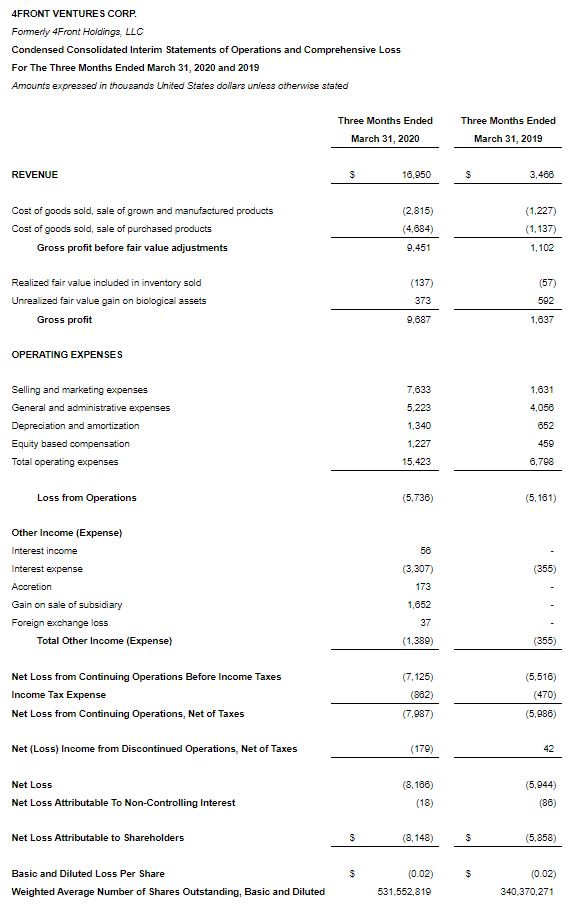





 Jake Heimark, Co-founder and CEO.